
Particle で
At; by; with; as a group; because of
で marks the setting or means of an action and has several other concrete beginner uses.

In plain language
で is a small word called a particle. After a place, it tells you where an action happens. After a vehicle or tool, it tells you what someone uses to do the action.
When to use it
Look for で after a station, school, bus, train, chopsticks, or another place or means of doing something.
How to build it
Place で directly after the place, vehicle, or tool: 駅で (“at the station”), バスで (“by bus”), 箸で (“with chopsticks”). Then add the action.
A basic pattern
Action place + で
Examples in context
The grammar point is shown in blue in each sentence.
 駅で友達に会いました。えきでともだちにあいました。I met a friend at the station.
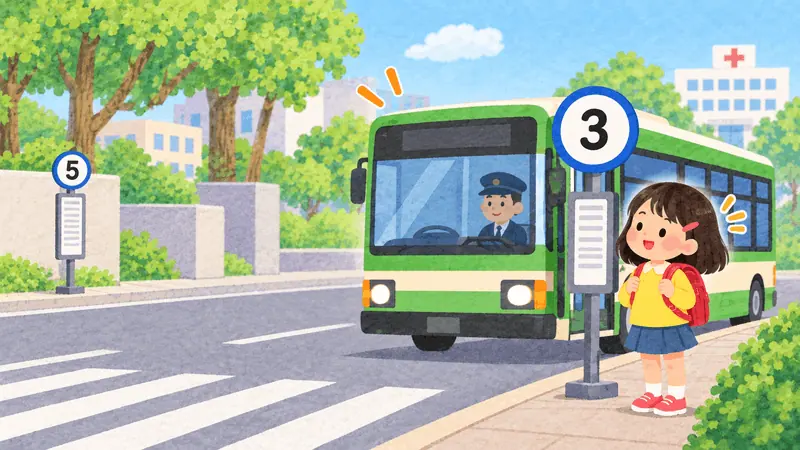 バスで学校へ行きます。ばすでがっこうへいきます。I go to school by bus.
 箸でうどんを食べます。はしでうどんをたべます。I eat udon with chopsticks.
Watch for this
図書館に勉強します。 → 図書館で勉強します。
An action location takes で; に marks existence or a destination.
Quick practice: Particle で
Check what you remember with three short questions. Your result stays in this browser.